


Need to Know Skills: Jordan Tweddle on Acting for Screen
Jordan Tweddle is an award-winning British actor, director and acting coach working across television, film, and theatre, with credits including ITV, BBC, HBO, and the National Theatre. He is also the founder of Knock & Nash Productions, a film and television company developing new screen work. We spoke to Jordan about leading our Acting for Screen module in Manchester, and his advice for training screen actors.
Why is the Acting for Screen module so important?
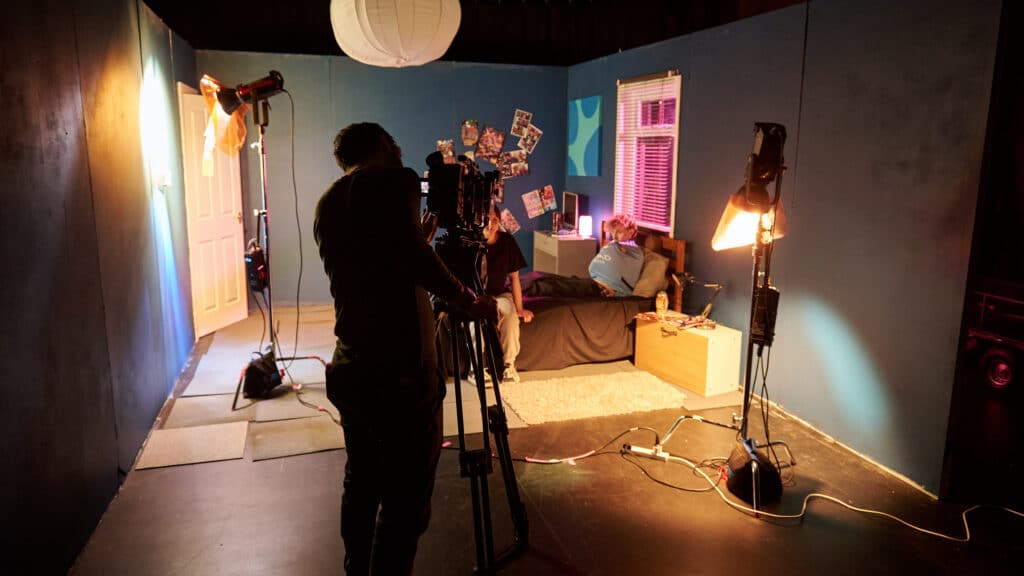
The module places actors inside the living environment of a film set. Screen performance doesn’t happen in isolation. It exists within light, camera, crew and time pressure. The aim was to create conditions where actors could experience that reality while still being supported as artists. The outcome isn’t simply better takes on camera. It’s actors who understand how their work lives within the language of film.
Why is screen acting such an important skill for today’s training actors?
The camera sees everything. It reads thought before it reads action. There’s nowhere to hide – every thought, every breath is visible. It captures what’s happening underneath the words. Unlike stage work, where performance has to travel across distance, the camera works differently. It responds to presence, to listening, to thought in real time. It asks actors to let something real happen in front of the lens. Learning how to live truthfully within that frame is an essential part of the craft.
How did you set up the module to reflect real industry practices and environment, and why is this important?
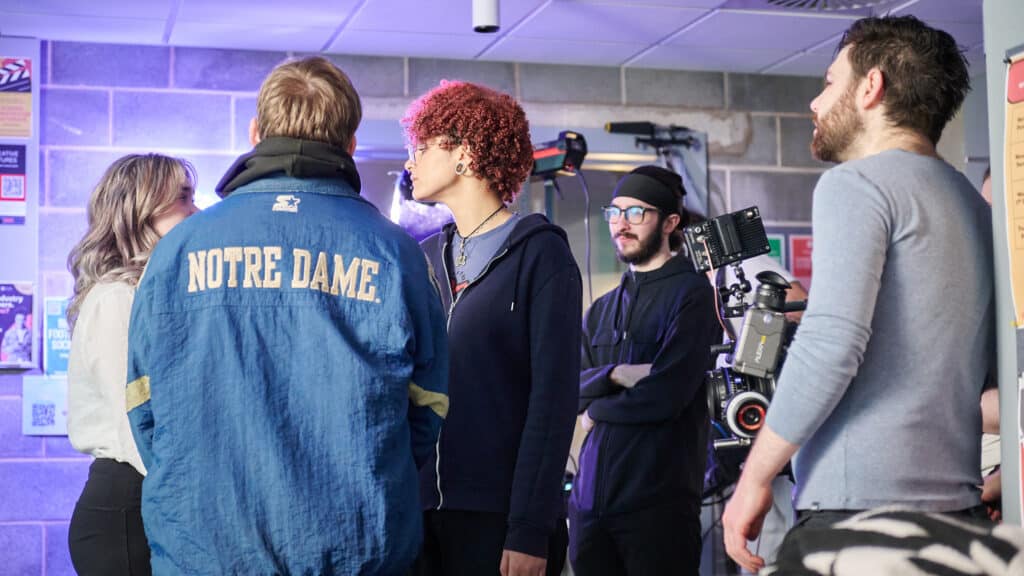
We built the module to feel like a real set. Professional crew were brought in so the actors could experience the rhythm and discipline of screen production – marks, lenses, continuity, multiple takes – the technical world that surrounds performance.
Actors also stepped into selected crew roles during the process. Not to turn them into crew, but to help them understand how a set actually works. Film is a collaborative art form, and actors who understand that collaboration tend to work very differently. It means actors arrive on their first professional set ready to work.
What are your best bits of advice for budding screen actors?
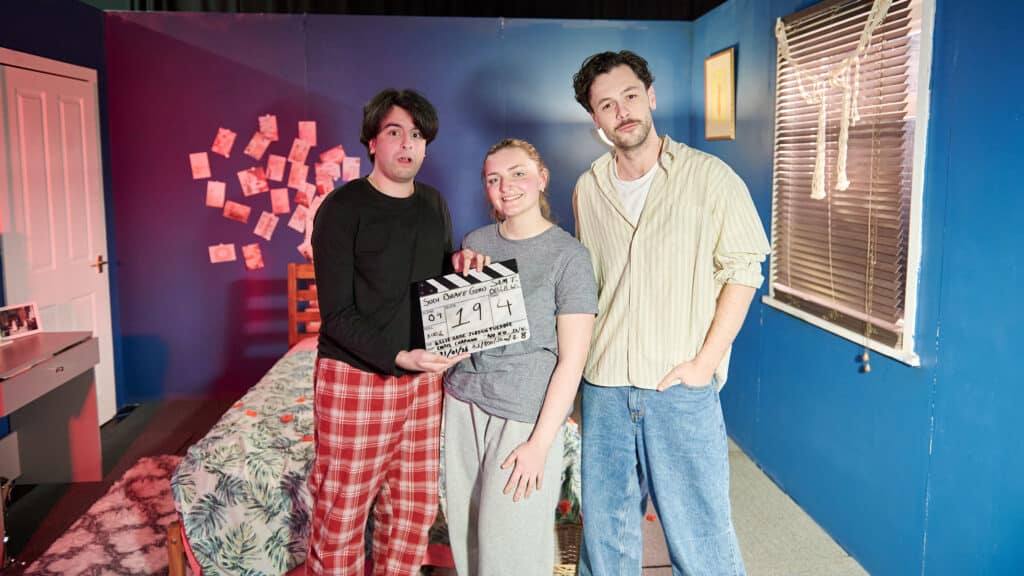
Listen. Really listen – so much of screen acting lives in attention – how you respond to another person, how you absorb what’s happening in the moment. Set up a camera at home and watch yourself work – it’s one of the simplest ways to start understanding how the camera sees you.
Also, generally, just be good to work with. Talent may open the door, but being someone people want to spend 14 hours on set with is what will keep you in the room.
To discover more about Performers College, including auditions and how to apply, contact us at [email protected] or you can Apply Now, or book an Open Day on our Events page.
